Skip to content
Atlas profile

Mohamed Khayat

@mohamedkhayatVerified GitHub profile

Tunisian engineering student passionate about AI

AI-Atlas score

Specialist
0100
Strongest
Machine Learning
74.2/100 domain score
Rank
2nd=
of 69
Tunisia
1st
of 2
  • TunisiaLocation
  • 11 Nov 2026Mapped
  • 15 / 16AI projects
01Skills matrix

AI Skills Matrix

AI Skills Matrix scores, 0 to 100
Machine Learning74
Computer Vision73
Data Science50
NLP & LLMs67
AI Agents14
MLOps48

Each node is one domain, scored only from evidence in these public repositories. Select one to see why.

Deep, repeated, well-engineered work in this domain.

02Evaluated projects6 of 15

16 public repositories → 15 with AI work, evaluated. The other 1 (repositories without AI code, forks and empty repositories) are not scored and have no effect on the result. How repositories are selected

Ranked by contribution

Ordered by how much each project adds to the Atlas score, not by its own score. A project with evidence in several domains can rank above one with a slightly higher project score. Choose a domain to focus on the projects with meaningful evidence there.

01

ML Application· Python

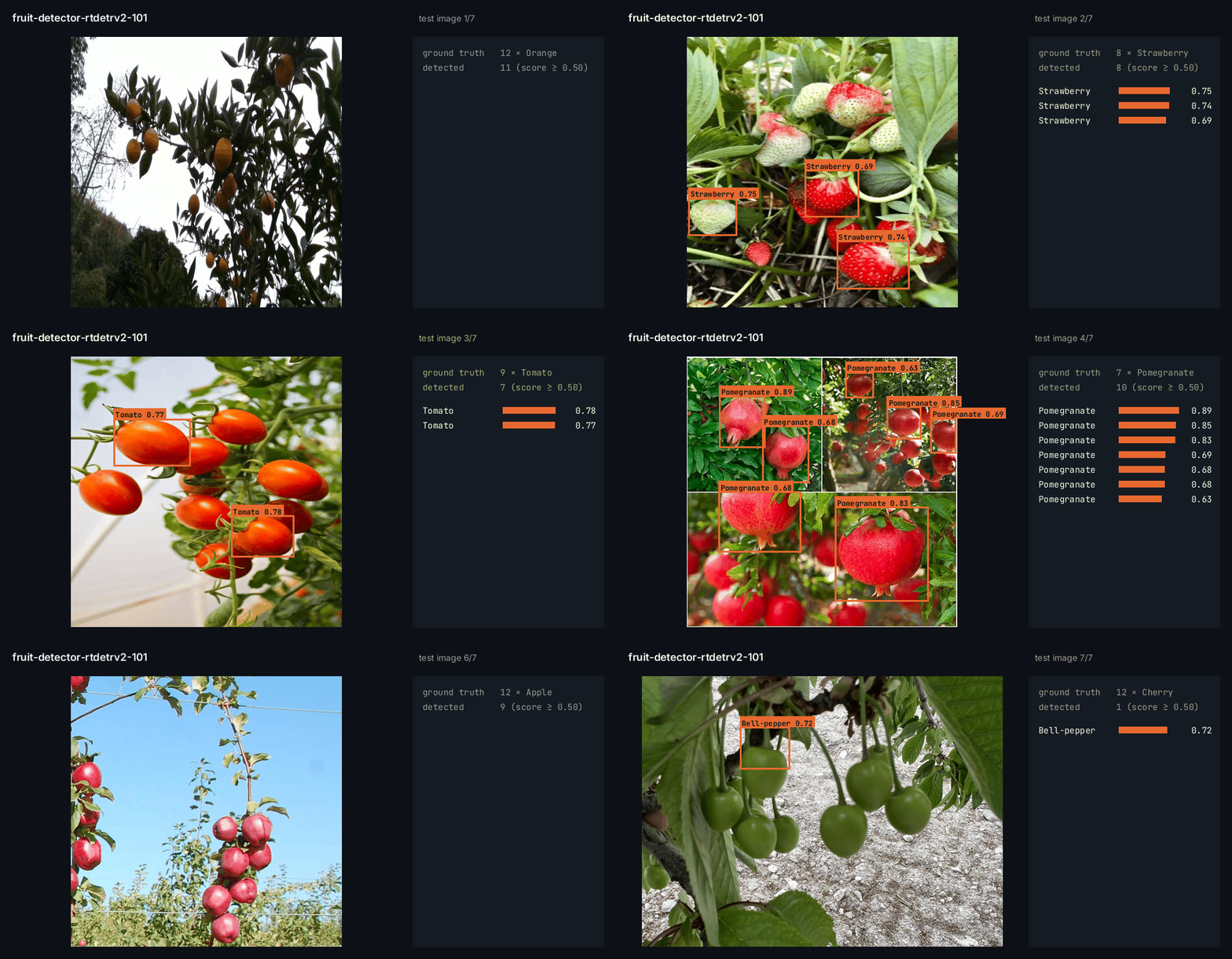
The published RT-DETRv2-101 checkpoint detecting oranges, strawberries, tomatoes, pomegranates, apples and cherries on h

This repository provides a framework for fine-tuning Hugging Face transformer-based object detection models on custom datasets, featuring a comprehensive training loop with advanced techniques (gradient accumulation, FP16, EMA, etc.), a Streamlit inference UI, and tools for uploading models to Hugging Face Hub. It is demonstrated on a fruit object detection task with 16 models achieving mAP scores up to 0.68.

Computer Vision0.95Machine Learning0.90MLOps0.40Data Science0.30
02
77.0

Advanced

20% of Atlas Score

AI Developer Tool· Python

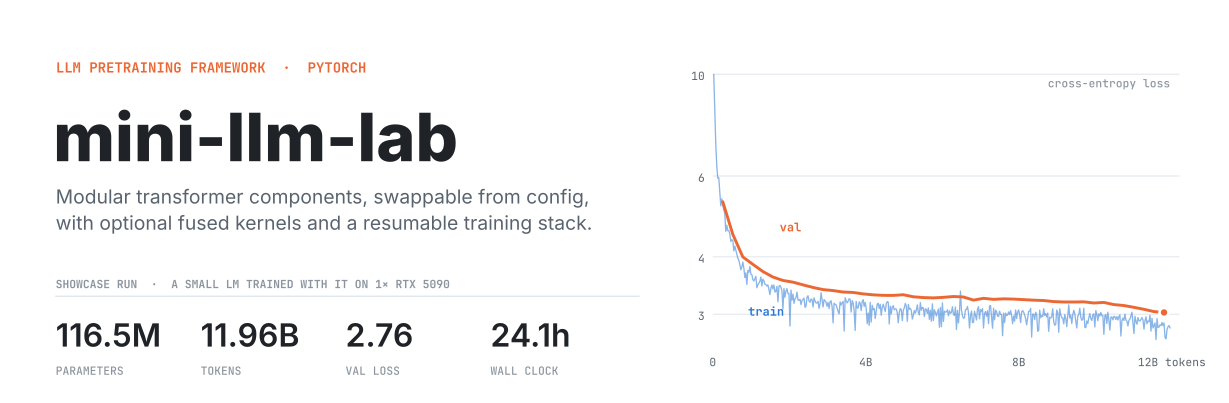
mini-llm-lab: a configurable LLM pretraining framework in PyTorch. Showcase run: a 116.5M-parameter model trained on 11.

mini-llm-lab is a configurable framework for pretraining decoder-only language models from scratch, featuring custom implementations of model components, a two-stage warmup-stable-decay training schedule, bit-exact resume capability, and an integrated chat interface for interacting with trained checkpoints.

NLP & LLMs0.95Machine Learning0.90Data Science0.40MLOps0.30
03
60.0

Advanced

14% of Atlas Score

Research Reproduction· Jupyter Notebook

The repository implements the Show, Attend and Tell image captioning model with soft attention, allowing comparison of different encoders (VGG19, ResNet50, CLIP ViT-B/16) on Flickr8k. It reproduces the paper's architecture and reports BLEU scores, noting deviations such as freezing the encoder weights.

Machine Learning0.90Computer Vision0.90NLP & LLMs0.60MLOps0.40
04
68.3

Advanced

12% of Atlas Score

Educational Implementation· Jupyter Notebook

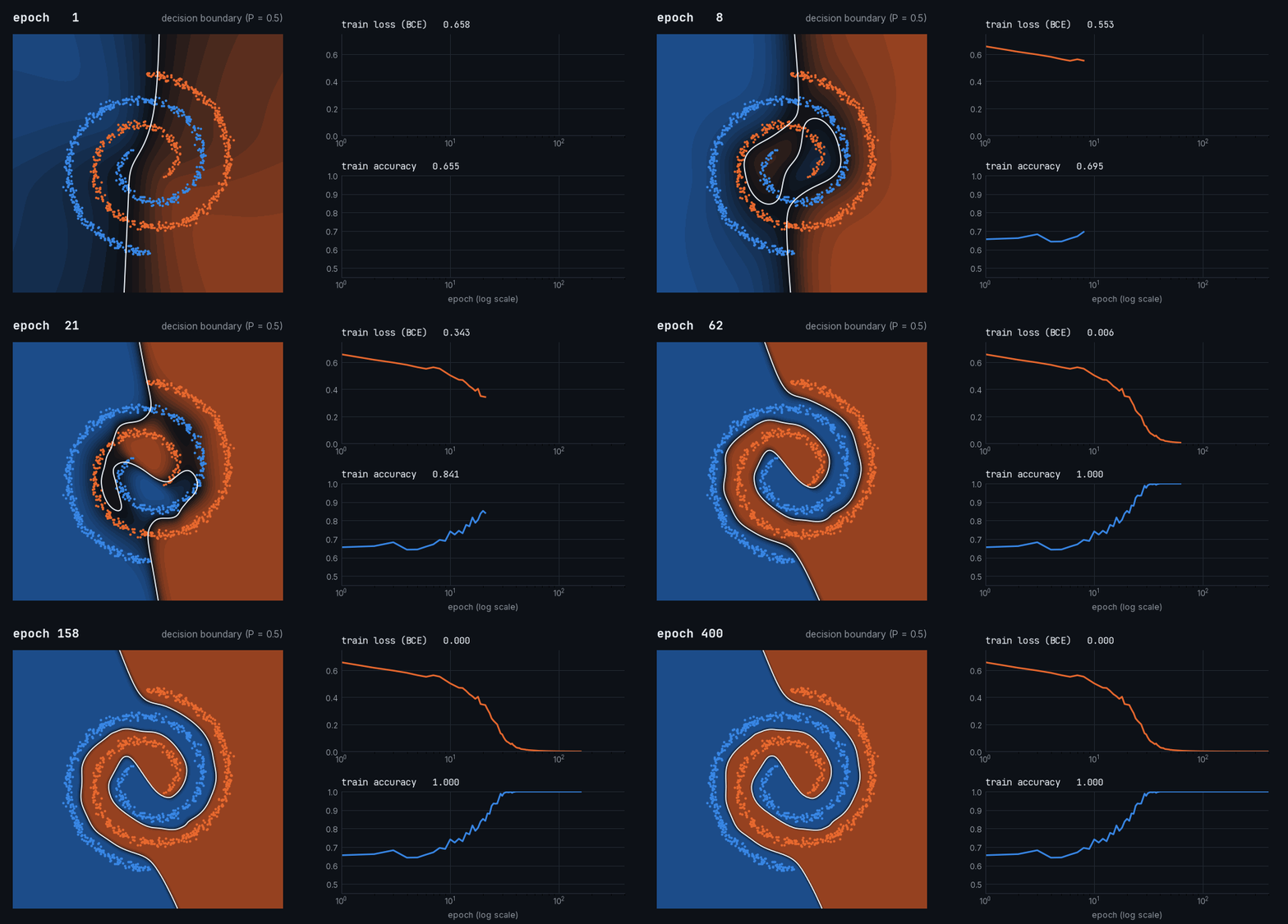
A 2-48-48-1 tanh network trained with this library on the two-spirals problem: the decision boundary starts as a straigh

DIYNeuralNet is a from-scratch NumPy-based neural network library designed for educational purposes, featuring hand-derived forward and backward passes for layers, activations, losses, and optimizers, accompanied by detailed documentation and runnable notebooks.

Machine Learning0.90Computer Vision0.40Data Science0.20MLOps0.20
backpropagationdeep-learningdropoutmachine-learningneural-networks
05
56.7

Implementation

10% of Atlas Score

AI Developer Tool· Python

This repository provides a flexible PyTorch-based training pipeline for image classification tasks, supporting various architectures via Hydra configuration and integrating Weights & Biases for experiment tracking. It includes custom CNN models, data loading utilities, training loops with mixed precision and Grad-CAM, and early stopping.

Machine Learning0.90Computer Vision0.90MLOps0.50Data Science0.40
06
52.9

Implementation

7% of Atlas Score

ML Application· Jupyter Notebook

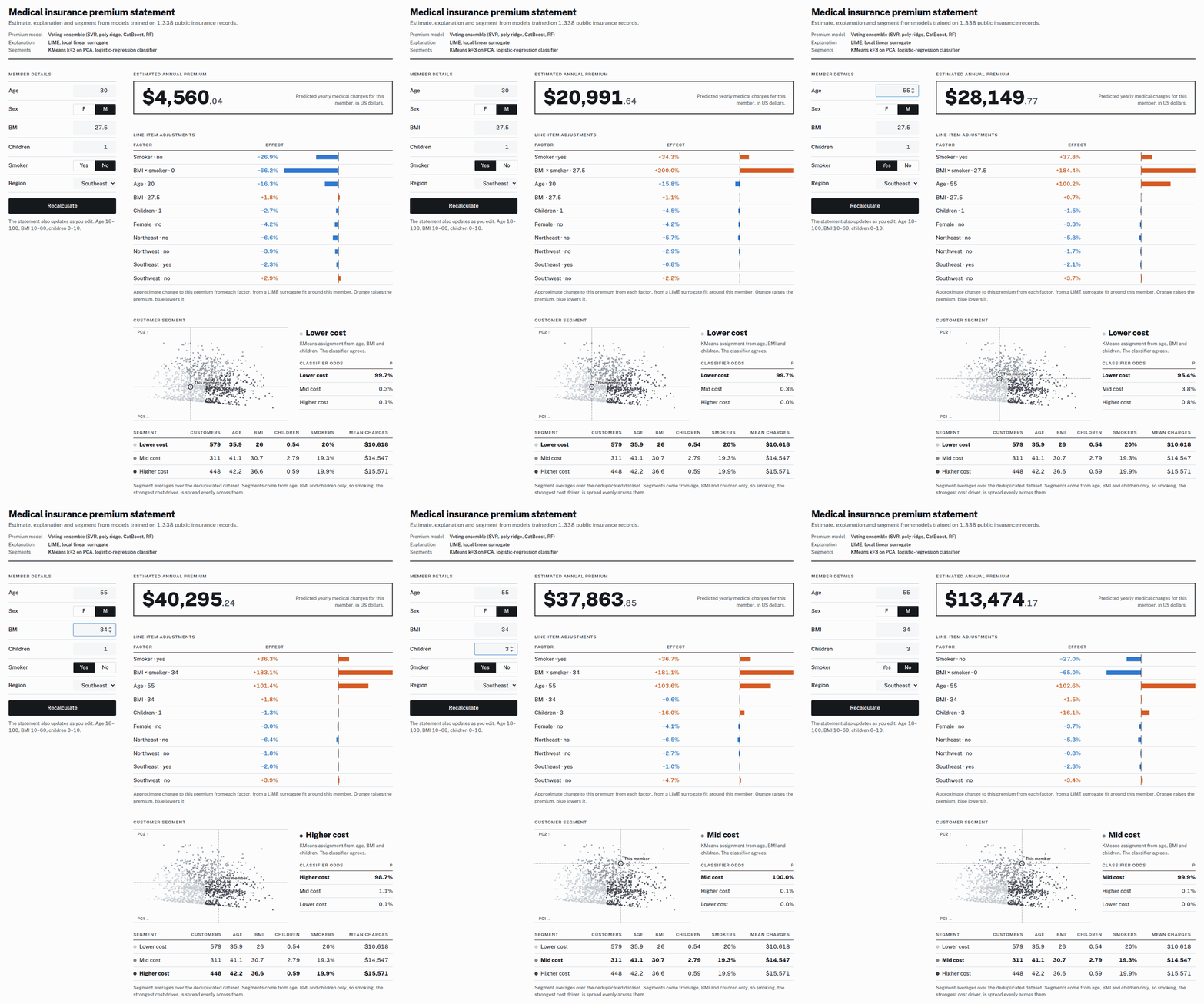
The demo UI. Left: member details form with age, sex, BMI, children, smoker and region. Right: the estimated annual prem

This repository provides an end-to-end machine learning application for estimating medical insurance premiums. It includes a CRISP-DM based training notebook, a FastAPI serving API with model inference, LIME explanations, customer segmentation, and a simple UI.

Machine Learning0.85Data Science0.75MLOps0.25